Digital Transformation
Replacing spreadsheets with systems that actually work for residents
The Problem
Government agencies run on legacy systems built decades ago. Residents submit paper forms that get manually entered into spreadsheets. Staff spend hours on data entry instead of serving people. Critical compliance tracking happens in email threads. When leadership asks for a status report, someone spends a week pulling numbers from five different sources.
Gavin Rozzi leads digital transformation at NJ DCA, building platforms that replace this chaos with systems residents and staff can actually use. His team has cut reporting time by 70%, connected 564 municipalities to unified tracking systems, and built the data infrastructure behind New Jersey's affordable housing programs.
Director, DHCR Data Center
New Jersey Department of Community Affairs
Leading digital transformation initiatives that bridge policy objectives and technical execution. Building an in-house government technology team that designs and delivers modern, resident-first digital experiences while maintaining compliance with security and accessibility standards.
What This Looks Like in Practice
When A4/S50 passed, DCA needed to track affordable housing compliance across 564 municipalities. That meant building the NJ HOMES Choice Tool from scratch while coordinating policy teams, municipal affairs specialists, and local officials across the state. The platform reduced reporting time by 70% and supported the first cohort of NJ HOMES grantees.
Policy implementation requires translation. Legislation creates requirements, but systems must interpret those requirements in ways that work for the people using them. The Municipal Lead Portal took dense lead paint regulations and turned them into a compliance workflow that code officers could actually navigate, tracking thousands of properties across New Jersey municipalities.
Building government technology teams means working within civil service constraints. We hire for capability and develop expertise internally rather than depending on contractors. When my team delivers a platform, the institutional knowledge stays inside government.
When residents face eviction, they need information they can understand immediately. The NJ Eviction Guide translates complex tenant rights into accessible, bilingual content. Built by the in-house development team I conceived at DCA and recently rewritten from Vite/React to Next.js, it demonstrates how government can build and maintain modern web applications internally rather than depending on outside vendors.
Government Projects
NJ Civil Service Navigator
Web platform making 5,128+ NJ Civil Service job specifications searchable and accessible for job seekers, HR professionals, and hiring managers.
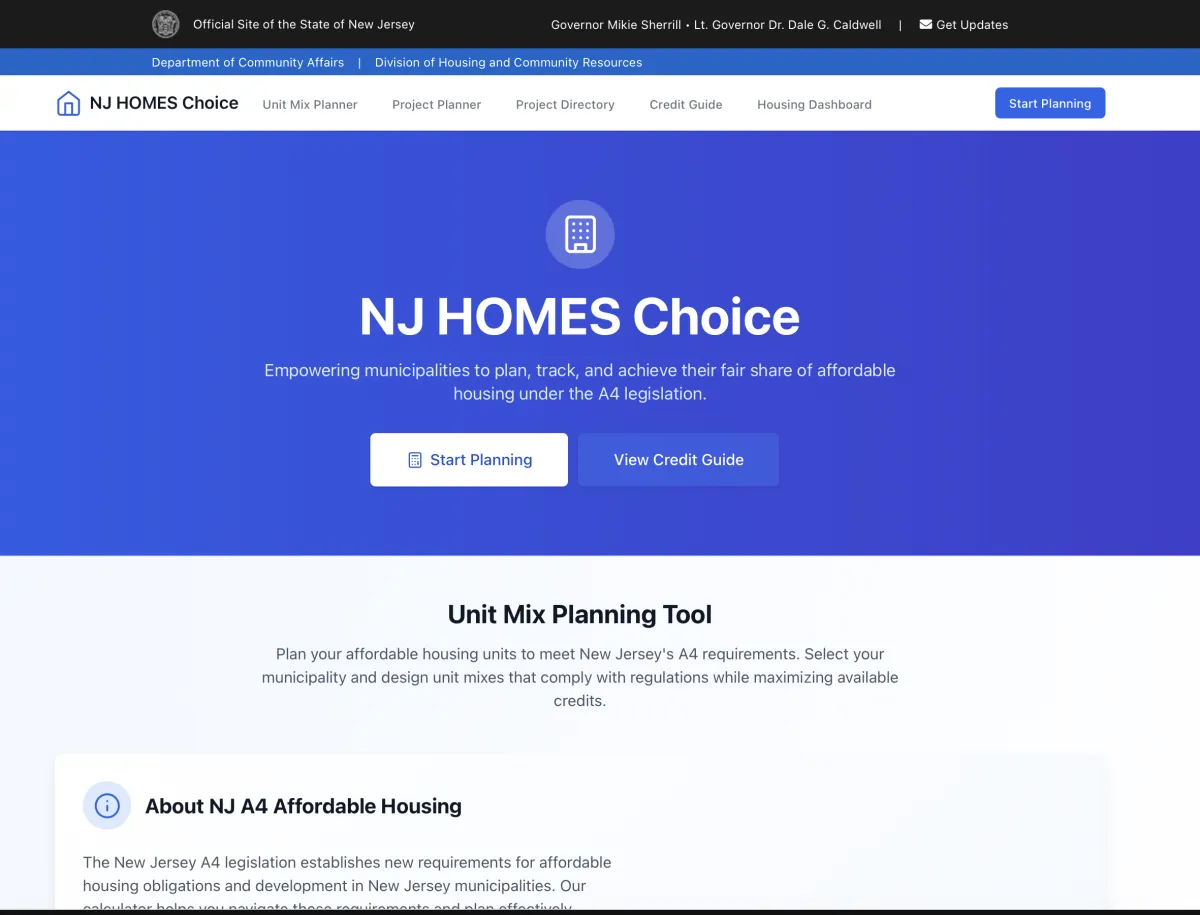
NJ HOMES Choice Tool
Interactive planning tool implementing A4/S50 affordable housing calculations for all 564 municipalities, supporting NJ HOMES grantmaking and municipal compliance.
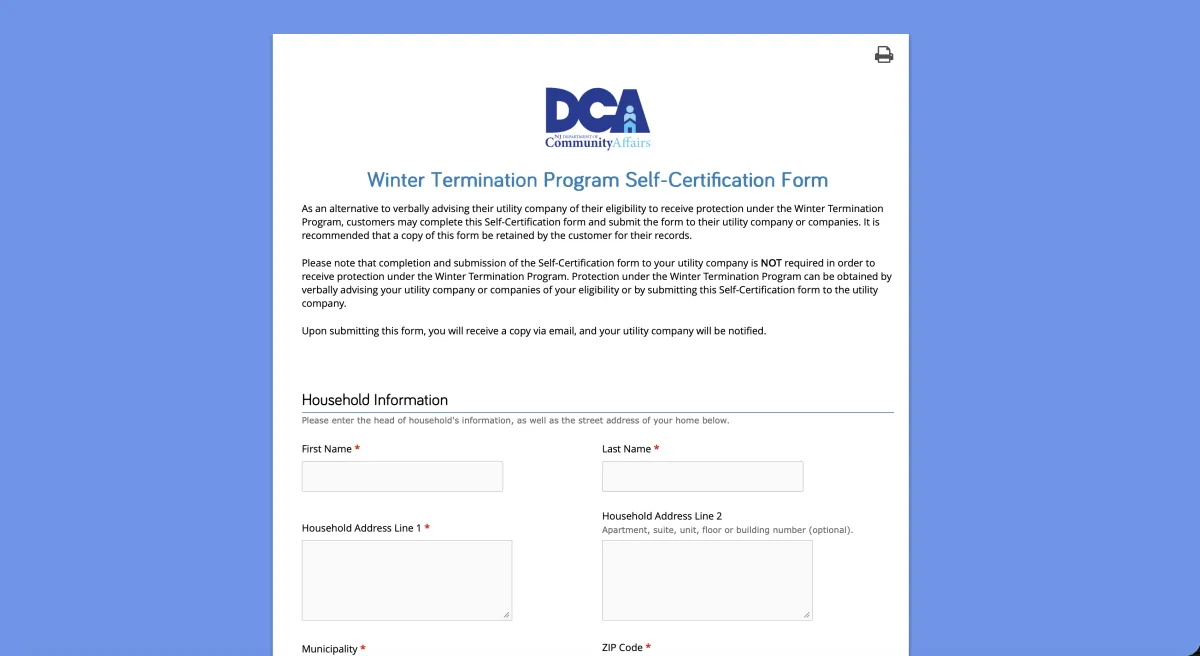
Winter Termination Program Digital Transformation
Digital transformation of New Jersey's utility shutoff protection self-certification process, replacing a manual PDF with an accessible electronic form.
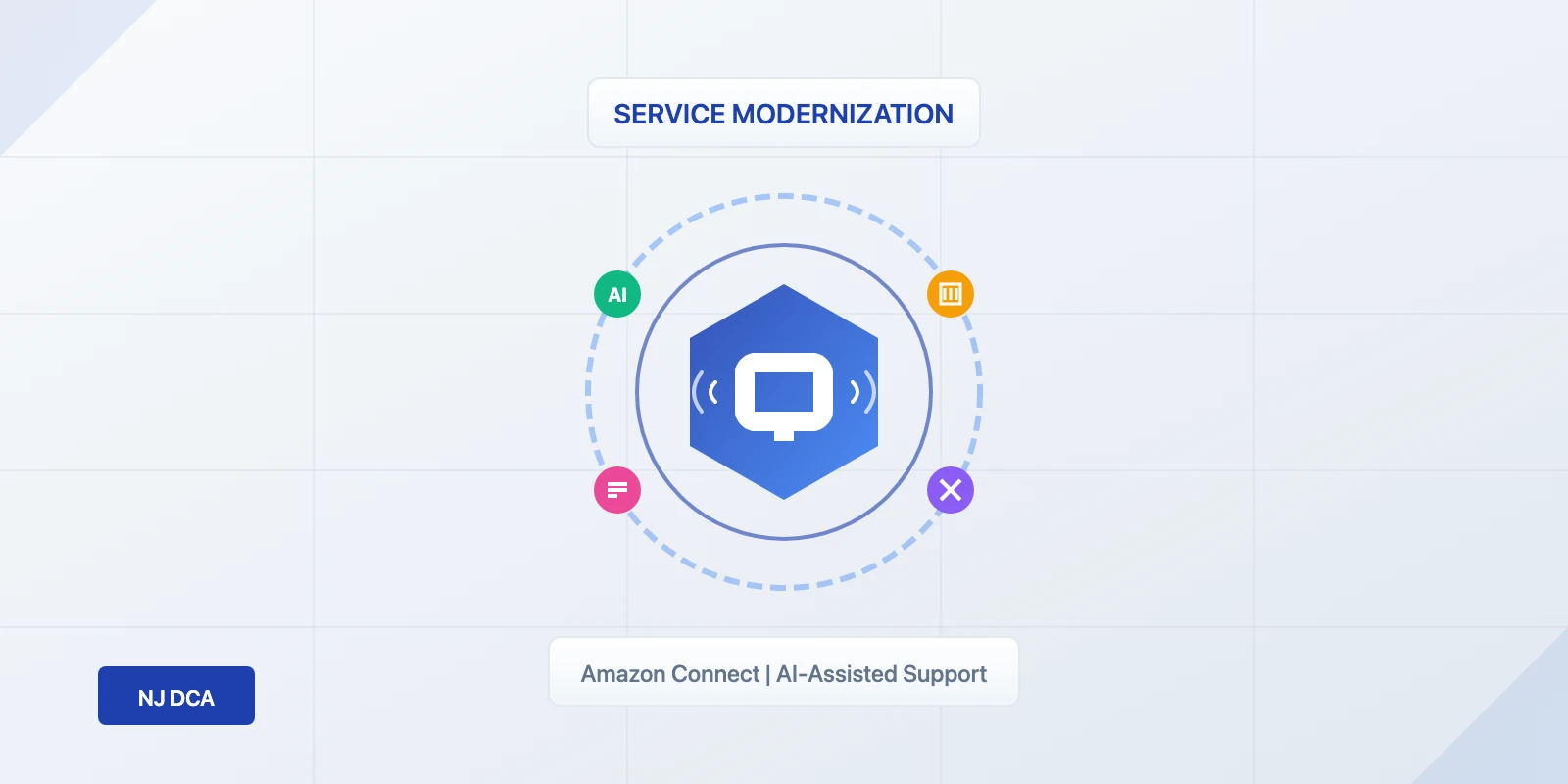
Operation Right Answer: Housing Services Modernization
Led development of a data-driven service framework to modernize how New Jersey housing programs serve residents, partnering with the New Jersey Innovation Authority to implement AI-assisted contact center technology.
NJ Eviction Guide
Interactive self-help tool connecting New Jersey's most vulnerable residents directly to housing assistance and legal resources.
Bringing Veterans Home Digital Infrastructure
Statewide digital infrastructure supporting New Jersey's initiative to end veteran homelessness—data systems, electronic referrals, and public website development.
Municipal Lead Reporting Portal
Statewide compliance platform capturing residential lead-paint inspection data for all 564 New Jersey municipalities.

OPRAmachine
New Jersey's first statewide freedom of information platform, processing over 75,000 public records requests and releasing 250GB of government data.
Recognition
Speaking & Media
Artificial Intelligence in Higher Education Panel
The Power of Public Colleges & Universities Conference - Stockton University
talkCareers in Public Informatics, Data Analytics and AI Panel
Edward J. Bloustein School of Planning and Public Policy - Rutgers University
talkRe-envisioning Housing Data: Usability, Integration, and Systems Alignment
2025 Monarch Housing Associates Conference
talkFrom Prompt to Public Service: Putting Advanced AI Use Cases into Production for Government Teams
Community of Practice for Public Evaluation and Research (CoPPER)
Articles & Insights
React and TypeScript Best Practices for Government Applications
Lessons learned building production React applications with TypeScript for government clients who demand reliability, accessibility, and security
Feb 15, 2024Digital Transformation in Government: Lessons from the Trenches
Practical insights on modernizing government technology infrastructure and processes from years of hands-on experience
May 12, 2023Why Open Data Matters for Government Transparency
Exploring how open data initiatives improve government services and enable citizen engagement in the digital age
Aug 20, 2022Frequently Asked Questions
What is digital transformation in government?
Digital transformation in government involves modernizing legacy systems, implementing citizen-first digital services, and using data to improve decision-making. It requires balancing innovation with compliance, security, and accessibility requirements unique to the public sector.
What is Gavin Rozzi's role at NJ DCA?
Gavin Rozzi serves as Director of the DHCR Data Center at the New Jersey Department of Community Affairs. He leads digital transformation initiatives, standing up an in-house government technology team that operationalizes policy into resident-first digital experiences.
How does digital transformation improve government services?
Digital transformation improves government services by making them more accessible, efficient, and user-friendly. This includes online portals for citizen services, automated workflows, data-driven decision making, and mobile-friendly interfaces that meet residents where they are.
What challenges exist in government digital transformation?
Key challenges include modernizing legacy systems while maintaining continuity, meeting strict security and compliance requirements, ensuring accessibility for all users, managing change across large organizations, and balancing innovation with budget constraints.
What makes Gavin Rozzi's approach to digital transformation effective?
Gavin Rozzi combines technical expertise with deep understanding of government operations and policy. His approach emphasizes building in-house capability, user-centered design, and practical solutions that work within public sector constraints.
About the Author
