Government Operations & Service Delivery
Making government work the way residents expect it to
The Problem
Good policy fails when implementation breaks down. Legislation passes with ambitious goals, but agencies lack the systems to track compliance. Programs launch without workflows to process applications. Residents qualify for services they never receive because the right data never reaches the right people. The gap between policy intent and operational reality costs millions in wasted resources—and erodes public trust.
Gavin Rozzi works at this intersection of policy and operations. His team designs and delivers the systems that turn legislative mandates into functioning programs—tracking affordable housing compliance across 564 municipalities, processing constituent requests, and ensuring that policy outcomes are measurable and achievable.
NJ Eviction Guide
A bilingual resource helping New Jersey renters understand their legal rights during eviction proceedings. Built and maintained by an in-house web development team I conceived at DCA, recently migrated from Vite/React to a full Next.js rewrite for improved performance and maintainability.
An Inside Perspective
Working within government provides insights that external consultants rarely access. Understanding the rhythm of budget cycles, the importance of stakeholder relationships, the constraints of procurement, and the weight of compliance requirements shapes how modernization efforts succeed or fail. Service on the board of the NJ Foundation for Open Government adds another dimension—governance experience that bridges the builder and oversight perspectives on institutional transparency.
This experience informs an approach that works with institutional realities rather than against them—building coalitions, demonstrating value through incremental wins, and maintaining the trust necessary for sustained progress.
My work at DCA contributes to New Jersey's broader digital transformation ecosystem, complementing initiatives across state agencies focused on customer-centric service delivery, data-driven decision making, and equitable access to government services. This collaborative approach—coordinating across agency boundaries through partnerships with the Office of Innovation and other state entities—reflects the administration's commitment to making government work better for all residents.
What This Work Actually Requires
Understanding government means knowing who actually makes decisions. Not just org charts, but the budget analysts who control allocations and the career staff who remember what failed last time. When the NJ HOMES Choice Tool launched, success required coordinating across policy teams at DCA, municipal affairs specialists, and 564 separate local governments. That coordination happened because we understood the institutional context, not despite it.
Policy implementation is translation work. Legislation creates requirements, but someone has to interpret those requirements into systems that enforce compliance while remaining usable. The Municipal Lead Portal took dense lead paint regulations and turned them into a tracking system that municipal code officers could actually use to verify compliance across thousands of properties.
Building government capacity means working within civil service frameworks, not around them. When we deployed housing compliance tracking to all New Jersey municipalities, the goal was not just launching a tool. The goal was building institutional capability that would outlast any individual project or administration.
How Change Actually Happens
When we rolled out housing compliance tracking to 564 municipalities, success required finding the one person in each county office who cared about the data. Those champions became force multipliers, explaining the system to their colleagues and advocating for adoption in their regions.
Large transformations happen through small wins. Every agency has institutional memory of failed initiatives. Demonstrating value incrementally builds the trust necessary for larger changes. The Civil Service Navigator started as a simple search tool and grew into workforce development infrastructure because each phase delivered measurable improvement.
Budget cycles, procurement rules, and compliance requirements are realities, not obstacles. Design solutions that work within these boundaries and you get sustainable change. Fight them and you get pilot projects that never scale.
Related Projects
NJ Civil Service Navigator
Web platform making 5,128+ NJ Civil Service job specifications searchable and accessible for job seekers, HR professionals, and hiring managers.
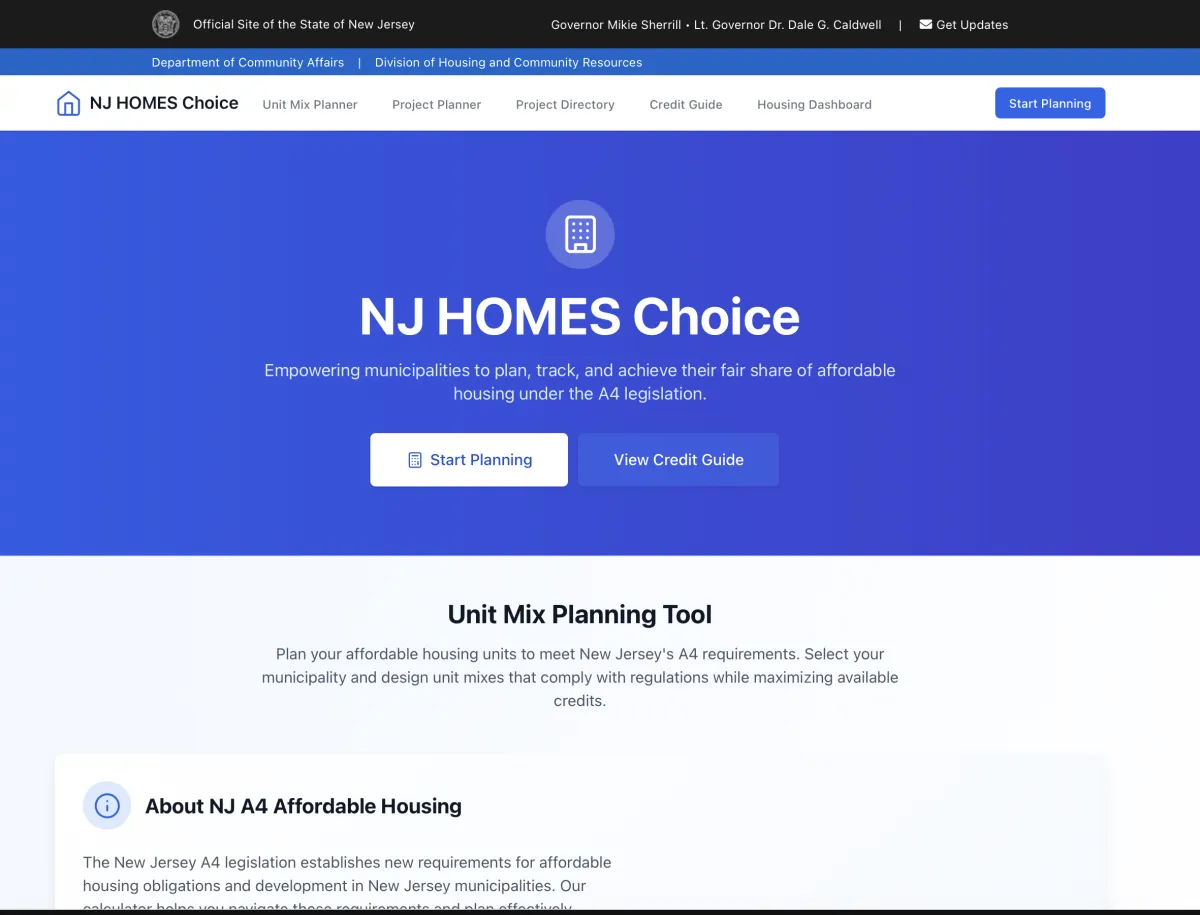
NJ HOMES Choice Tool
Interactive planning tool implementing A4/S50 affordable housing calculations for all 564 municipalities, supporting NJ HOMES grantmaking and municipal compliance.
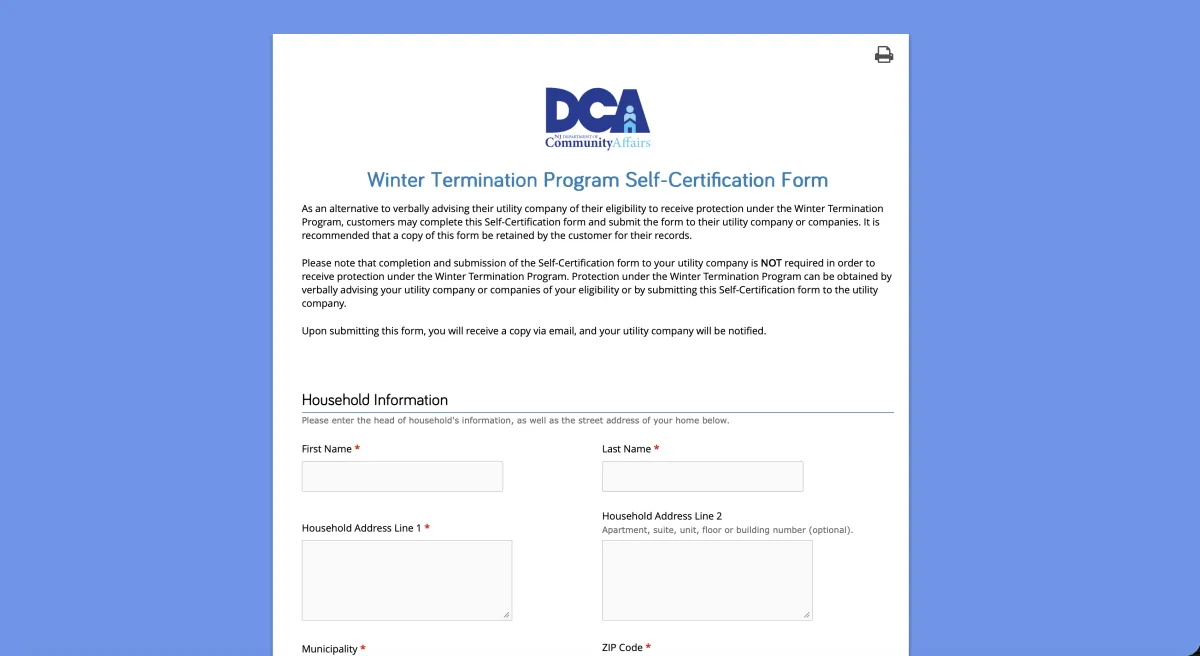
Winter Termination Program Digital Transformation
Digital transformation of New Jersey's utility shutoff protection self-certification process, replacing a manual PDF with an accessible electronic form.
Operation Right Answer: Housing Services Modernization
Led development of a data-driven service framework to modernize how New Jersey housing programs serve residents, partnering with the New Jersey Innovation Authority to implement AI-assisted contact center technology.
NJ Eviction Guide
Interactive self-help tool connecting New Jersey's most vulnerable residents directly to housing assistance and legal resources.
Bringing Veterans Home Digital Infrastructure
Statewide digital infrastructure supporting New Jersey's initiative to end veteran homelessness—data systems, electronic referrals, and public website development.
Speaking & Media
Artificial Intelligence in Higher Education Panel
The Power of Public Colleges & Universities Conference - Stockton University
talkCareers in Public Informatics, Data Analytics and AI Panel
Edward J. Bloustein School of Planning and Public Policy - Rutgers University
talkRe-envisioning Housing Data: Usability, Integration, and Systems Alignment
2025 Monarch Housing Associates Conference
talkFrom Prompt to Public Service: Putting Advanced AI Use Cases into Production for Government Teams
Community of Practice for Public Evaluation and Research (CoPPER)
Articles & Insights
Making Data Tell Stories: Visualization for Public Policy
How effective data visualization can transform complex policy issues into actionable insights for decision-makers and the public
Jun 22, 2024React and TypeScript Best Practices for Government Applications
Lessons learned building production React applications with TypeScript for government clients who demand reliability, accessibility, and security
Feb 15, 2024Digital Transformation in Government: Lessons from the Trenches
Practical insights on modernizing government technology infrastructure and processes from years of hands-on experience
May 12, 2023Why Open Data Matters for Government Transparency
Exploring how open data initiatives improve government services and enable citizen engagement in the digital age
Aug 20, 2022Frequently Asked Questions
What does it mean to navigate government bureaucracy effectively?
Effective navigation involves understanding organizational structures, decision-making processes, compliance requirements, and stakeholder relationships. It requires knowing how to move initiatives forward while respecting institutional constraints and building coalitions across departments.
What are the key challenges in government service delivery modernization?
Key challenges include legacy system dependencies, procurement constraints, security and compliance requirements, change management across large organizations, budget cycles, and maintaining service continuity during transitions.
How does policy translate into technology implementation?
Policy-to-technology translation involves interpreting legislative intent, identifying operational requirements, designing systems that enforce compliance, and creating user experiences that guide citizens through complex processes.
What skills are needed to drive change in government?
Driving change requires stakeholder engagement, understanding of procurement and budget processes, communication across technical and non-technical audiences, patience for iterative progress, and deep knowledge of the regulatory environment.
How does Gavin Rozzi's experience inform his government expertise?
Gavin Rozzi has worked within New Jersey state government, gaining firsthand experience with policy implementation, cross-agency coordination, workforce development, and service delivery modernization. This practical experience, combined with his technical background, provides a unique perspective on driving change within government.
About the Author
