Homelessness Economic Risk Framework (HERF)
A model built in-house at NJ DCA that shows where housing instability is building in New Jersey's 595 residential ZIP codes, so prevention can start before people lose their homes.
- 595 ZIP Codes
- Coverage
- NAHRO Award of Merit
- Recognition
- In-House at DCA
- Built
Overview
Most evidence that someone is losing their housing arrives late. It shows up in a shelter count, an emergency room or a child welfare caseload, after the cheaper chances to help have passed. HERF exists to show that strain earlier, ZIP code by ZIP code, while prevention can still work.
It also answers a question that used to take weeks: “What happens if this program gets cut?” Rent, eviction and homelessness data sit in different systems, and each office estimated impact its own way. HERF lets decisionmakers ask that question in plain language and get a defensible answer without a data team in the room.
Who Built It
Michael Callahan, former director of DCA’s Office of Homelessness Prevention, co-created HERF with me. HERF is as much his as mine.
The DHCR Data Center team has built on it since, and the version I presented at NAHRO in 2026 reflects their work.
How It Works
HERF produces two separate scores for every residential ZIP code in New Jersey:
- The Homelessness Risk Score is built from how many people entered the homelessness system from each ZIP code. It answers where the need is today.
- The Housing-Pressure Index tracks eviction pressure, rent strain, mortgage distress and housing cost burden. It answers where financial strain on households is growing.
Neither one is a count of people experiencing homelessness.
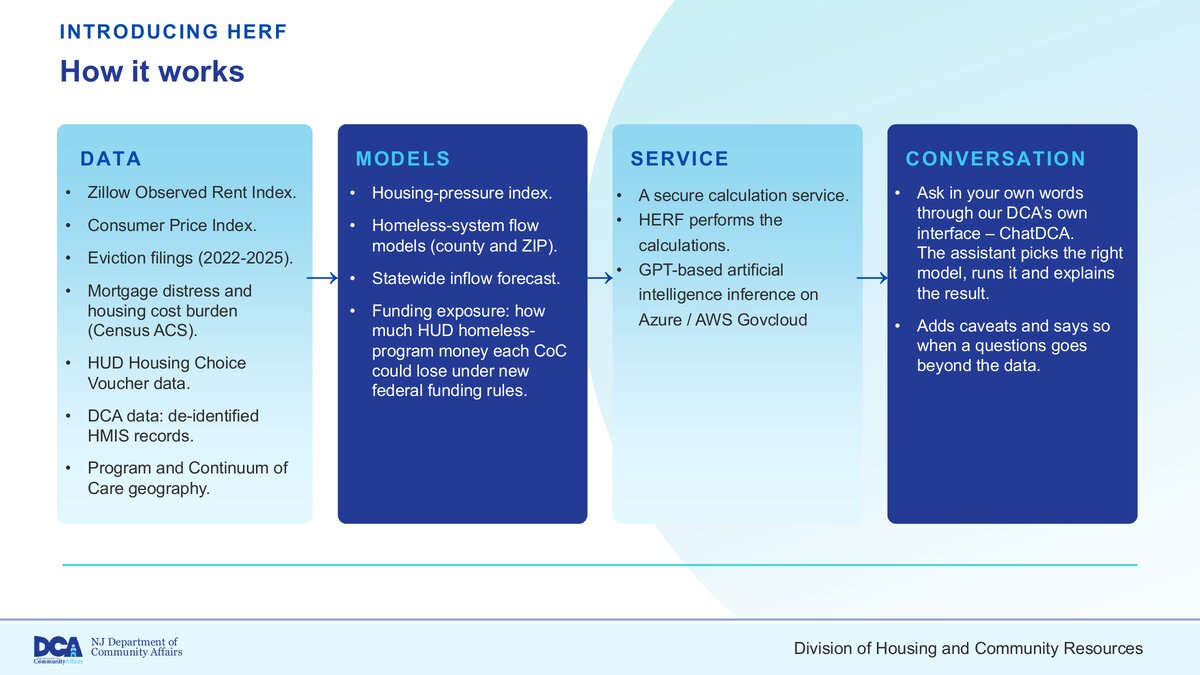
Underneath, public data (the Zillow Observed Rent Index, the Consumer Price Index, eviction filings, Census ACS cost-burden figures and HUD voucher data) is combined with de-identified HMIS records and program geography. Validated statistical models do the math in a secure calculation service. The GPT layer, reached through ChatDCA, picks the right model, runs it and explains the result in plain language, with caveats. The AI explains the math rather than doing it.
What It’s Used For
Authorized users can change assumptions about evictions, rent burden, mortgage distress and employment, then see what follows for health care, the courts, child welfare and the wider economy.
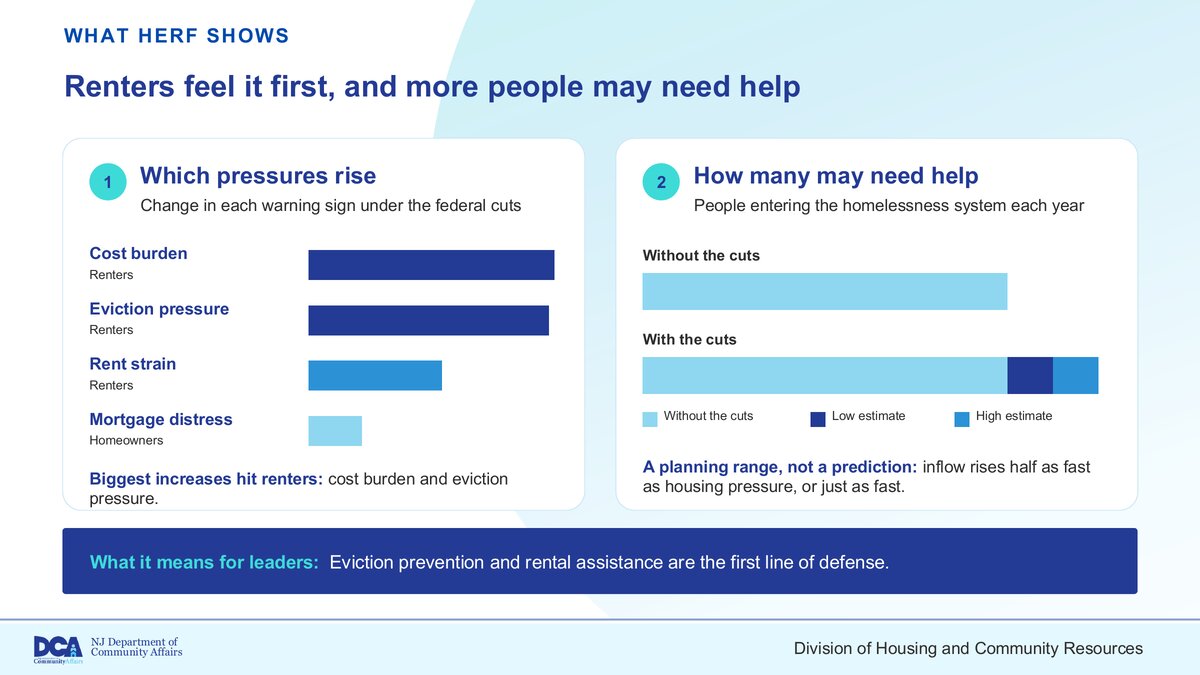
The worked example I presented at NAHRO combined three federal changes into one run: voucher time limits and work requirements, a voucher freeze, and SNAP and Medicaid cuts. Cost burden and eviction pressure rose the most, and both fall on renters. The model also projected more people entering the homelessness system, given as a planning range rather than a single number.
The same analysis can be rewritten for different readers. Senior leaders get statewide trends, legislators get impacts by district, and advocates get the funding exposure for their Continuum of Care. Every version uses the same numbers.
What It Won’t Do
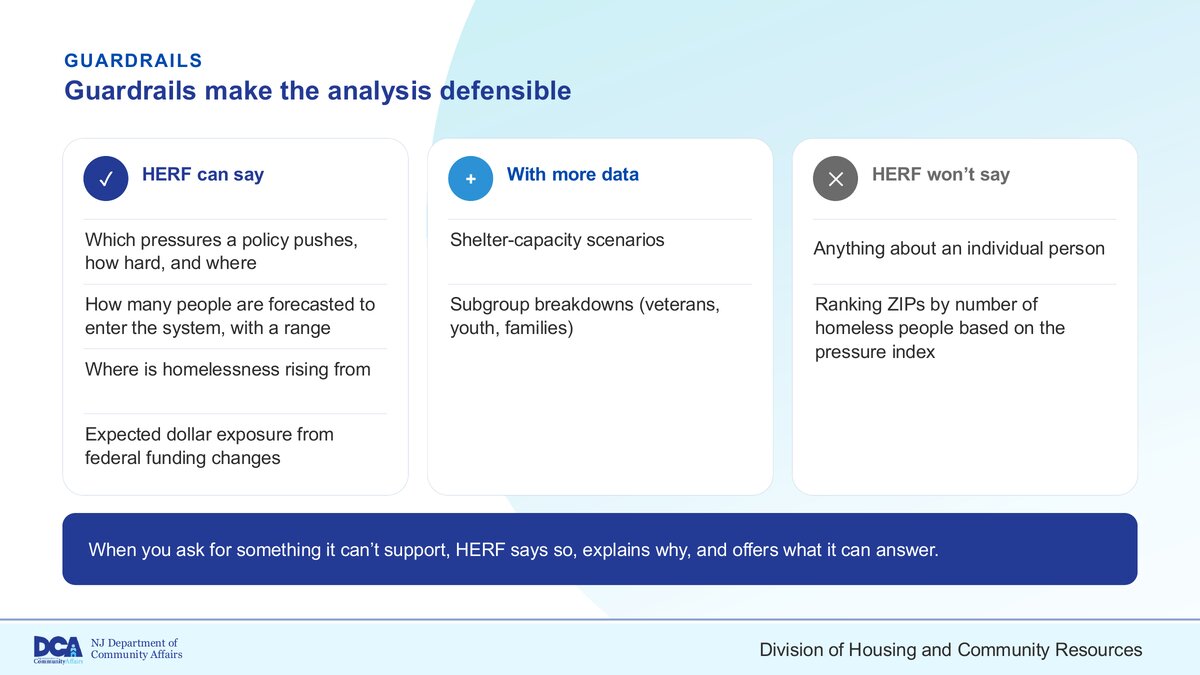
HERF says nothing about an individual person, and it won’t rank ZIP codes by number of homeless people based on the pressure index. When someone asks for something the data can’t support, it says so and offers what it can answer. Those limits are what make the results defensible in front of a legislator or a budget office.
Recognition
HERF received a 2026 NAHRO National Award of Merit, one of four NAHRO national awards I accepted on DCA’s behalf in Denver. DCA’s press release announcing the awards quotes me on why it matters:
“Housing instability doesn’t stay a housing problem. It shows up in emergency rooms and child welfare caseloads, usually after the point where prevention would have helped. HERF uses artificial intelligence to show where that risk is building and why, so the people planning prevention can see it earlier.”
Talks
- Using Generative AI to Predict Housing Instability and Model Solutions, NAHRO 2026 National Conference, Denver
- Re-envisioning Housing Data: Usability, Integration, and Systems Alignment, Monarch Housing Associates Conference, 2025
Frequently Asked Questions
What is the Homelessness Economic Risk Framework (HERF)?
HERF is a model built in-house at the New Jersey Department of Community Affairs. It shows where housing instability is building across New Jersey's 595 residential ZIP codes, so the people planning homelessness prevention can see the risk earlier. Michael Callahan, former director of DCA's Office of Homelessness Prevention, and Gavin Rozzi created it, and the DHCR Data Center team has built on it since.
Does HERF predict whether a specific person will become homeless?
No. HERF works at the ZIP code level and says nothing about individuals. It estimates which housing pressures a policy pushes and how many people may need help, as a range.
Who can use HERF?
HERF is an internal DCA tool for authorized users. It is not a public website.
Related Expertise
- Government Operations Navigating bureaucracy and modernizing public services from the inside
About the Author
