Using Generative AI to Predict Housing Instability and Model Solutions
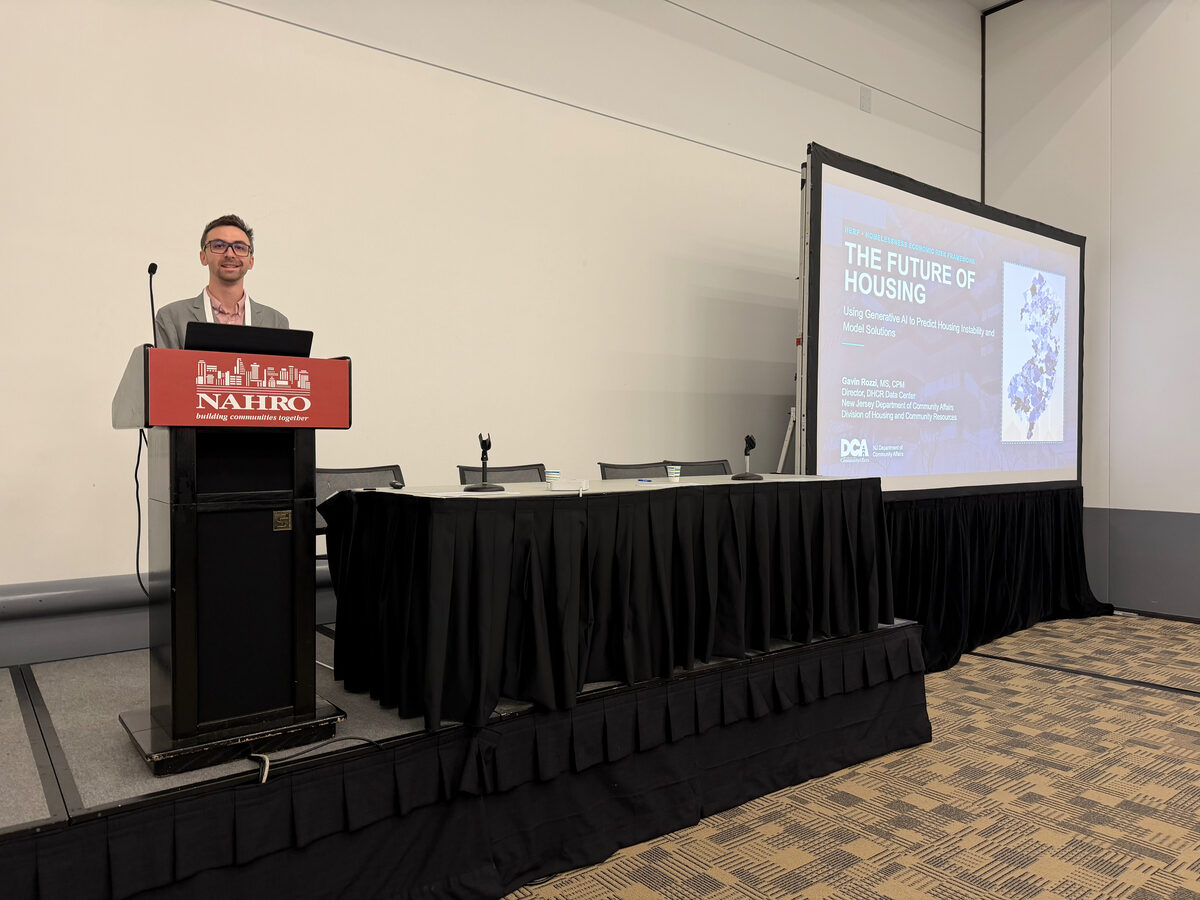
On October 16, 2026, I presented a session at the National Association of Housing and Redevelopment Officials (NAHRO) 2026 National Conference & Exhibition at the Colorado Convention Center in Denver, in my role as Director of the DHCR Data Center at the NJ Department of Community Affairs. The session was part of the conference’s “The Future of Housing” track.
Session Details
Using Generative AI to Predict Housing Instability and Model Solutions October 16, 2026, Colorado Convention Center, Denver, CO Track: The Future of Housing · 75 minutes
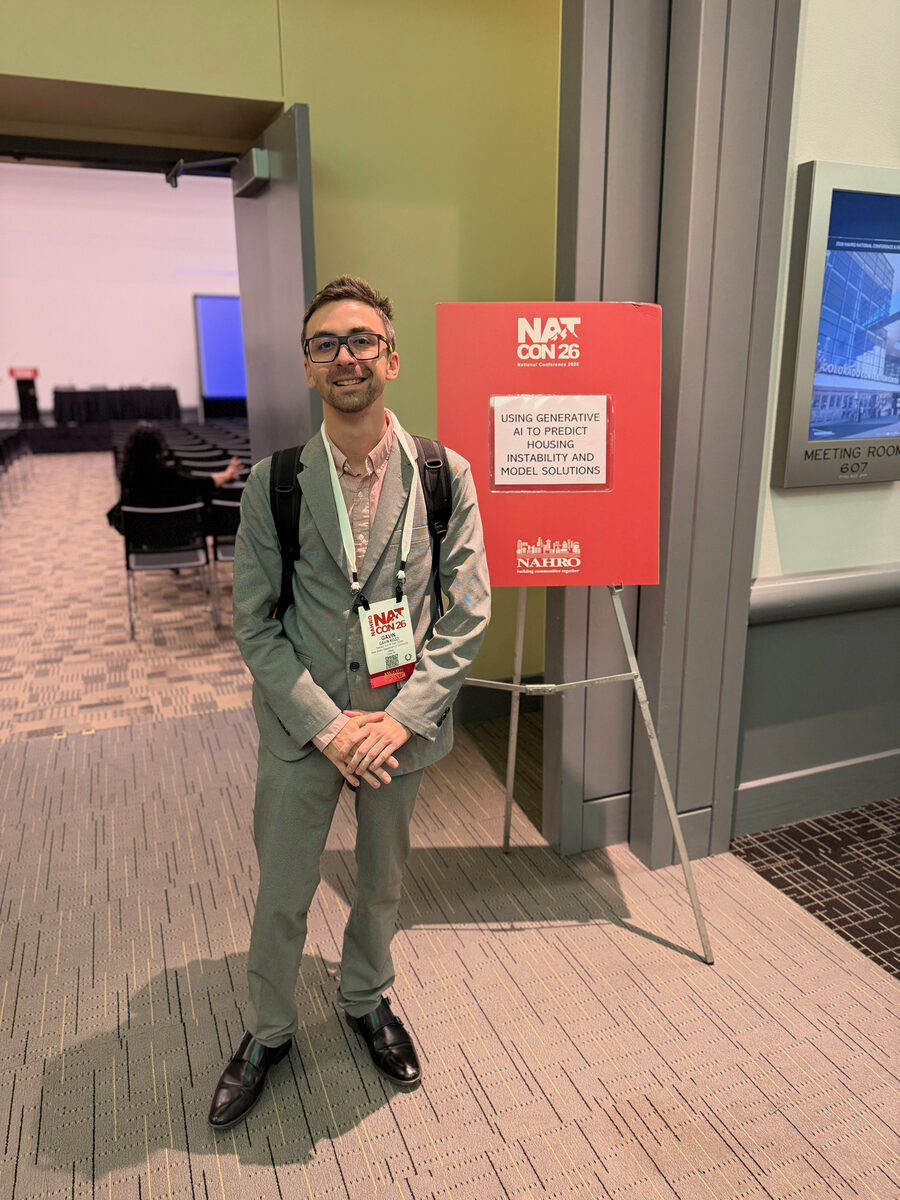
About the Session
New Jersey needed a way to anticipate increases in homelessness before they happened, particularly as federal policy and economic conditions became volatile. Just as important, it needed a tool that decisionmakers could use without a data team in the room to build dynamic, defensible models and test possible responses.
The answer was the Homelessness Economic Risk Framework (HERF), built in-house at the NJ Department of Community Affairs. HERF:
- Models risk at the ZIP code level across New Jersey
- Combines dynamic economic risk indicators with fixed structural factors
- Uses a conversational GPT interface so users can ask questions and run scenarios in plain language
- Draws on publicly available data sources alongside DCA-specific program data
What I Presented
I opened with the problem HERF was built for. Most evidence of a housing crisis arrives late, in shelter counts taken after people have already lost their homes. Asking “what happens if this program gets cut?” usually means filing a data request and waiting. Rent, eviction and homelessness data live in different systems, and each office estimates impact its own way.
HERF produces two separate scores. The Homelessness Risk Score is built from how many people entered the homelessness system from each ZIP code and answers where the need is today. The Housing-Pressure Index tracks four strain signals in every ZIP code (eviction pressure, rent strain, mortgage distress and housing cost burden) and answers where financial strain on households is growing. Neither one is a count of people experiencing homelessness.
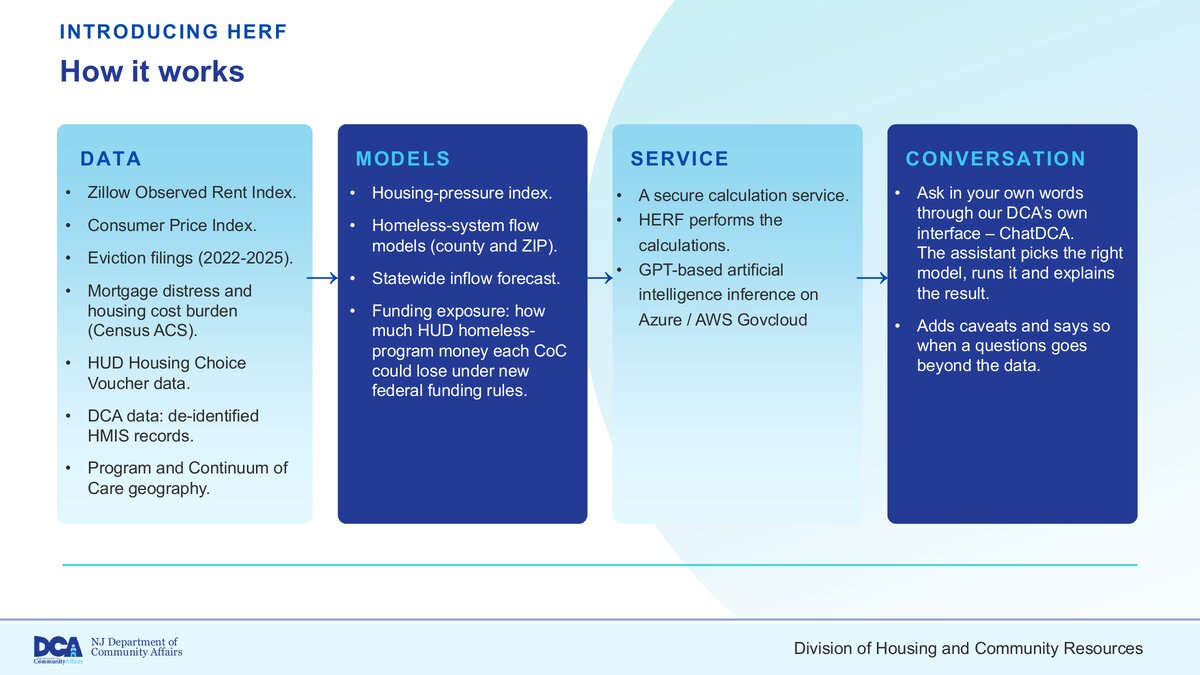
Underneath, public data (the Zillow Observed Rent Index, the Consumer Price Index, eviction filings, Census ACS cost-burden figures and HUD voucher data) is combined with de-identified HMIS records and program geography. Validated statistical models do the math in a secure calculation service. The GPT layer, reached through ChatDCA, chooses the right model, runs it and explains the result in plain language, with caveats.
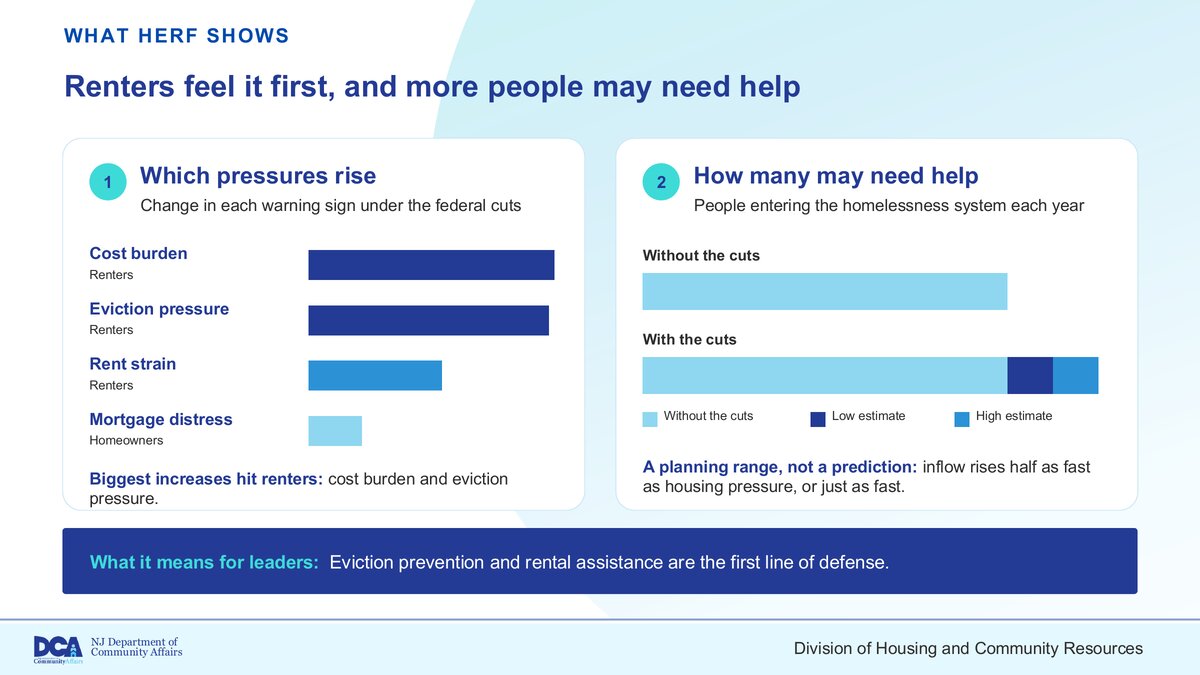
The use case was a “Full Federal Rollback” scenario. It combined three federal changes, two proposed in the 2025 “skinny budget” and one already law, into one model run: voucher time limits and work requirements, a voucher freeze, and SNAP and Medicaid cuts. Cost burden and eviction pressure rose the most, and both fall on renters. The model also projected more people entering the homelessness system. That estimate is a planning range: the low end assumes inflow rises half as fast as housing pressure, and the high end assumes it rises just as fast.
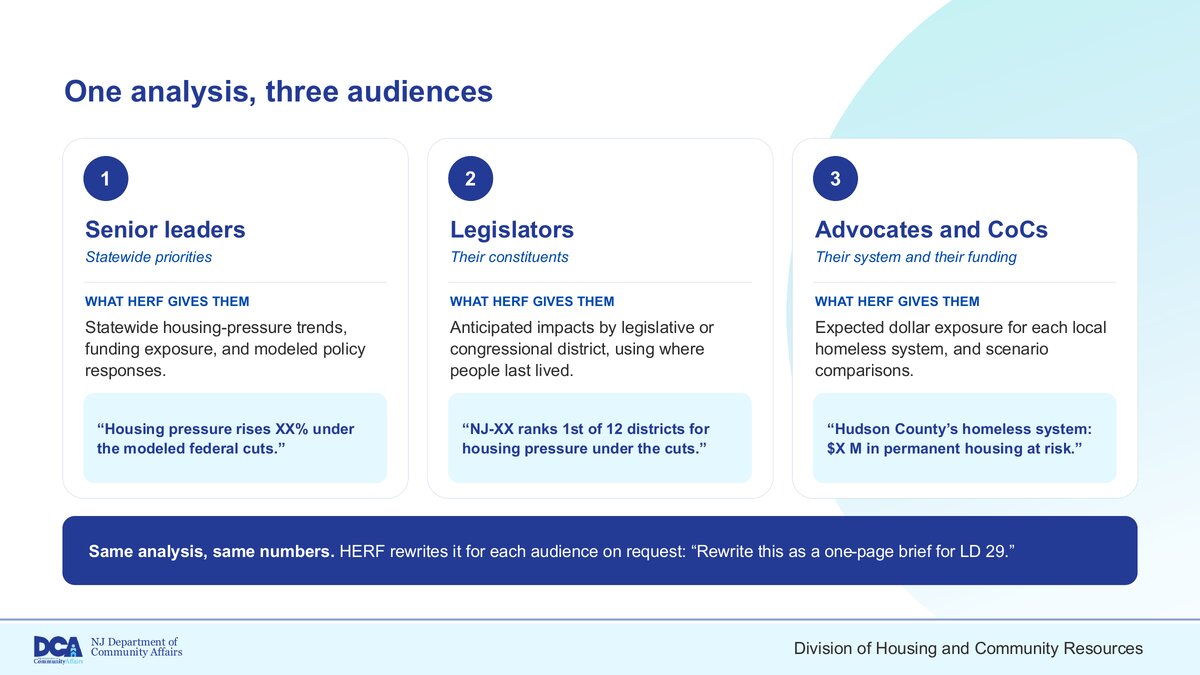
HERF can also rewrite one analysis for different readers. Senior leaders get statewide trends, legislators get impacts by district, and advocates get the funding exposure for their Continuum of Care. Each version uses the same numbers. A request can be as short as “Rewrite this as a one-page brief for LD 29.”
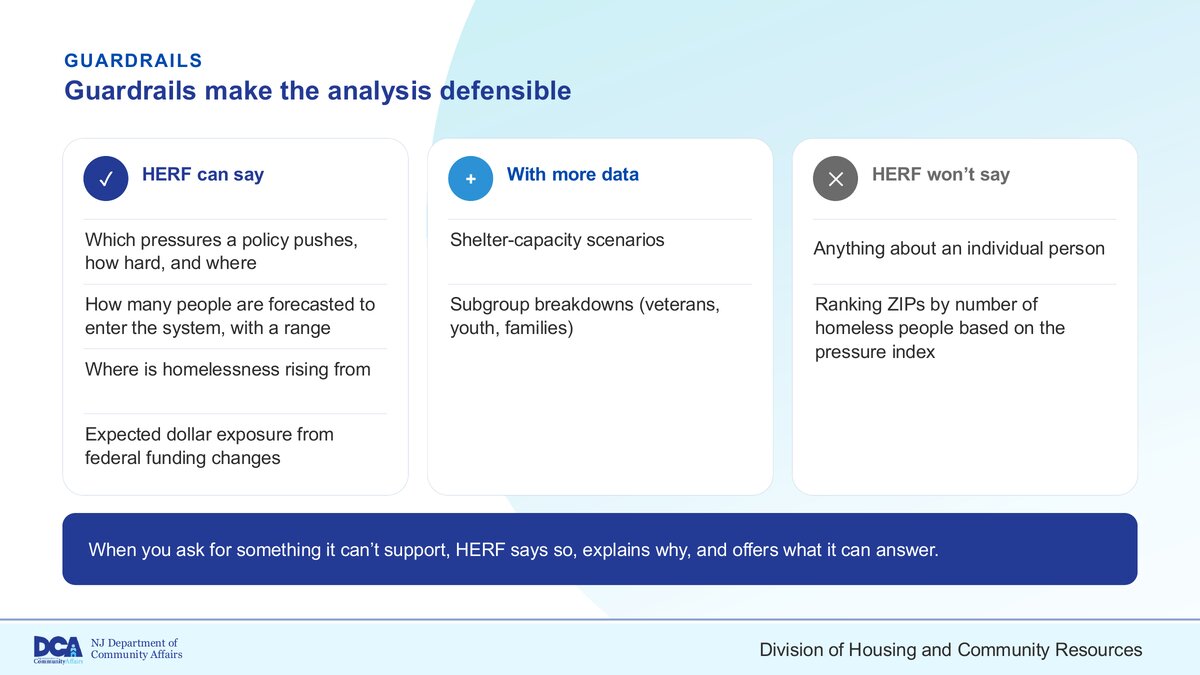
I also covered what HERF refuses to do. It will estimate which pressures a policy pushes and how many people may need help, with a range. It will not say anything about an individual person, and it will not rank ZIP codes by number of homeless people based on the pressure index. When asked for something the data cannot support, it says so and offers what it can answer.
I closed with six steps for agencies that want to build something similar. Start with a question that keeps coming up. Define the measures so everyone reads the results the same way. Bring public and program data together. Test the model against historical outcomes. Connect the AI to the validated model so it explains the math instead of doing it. Then tell users plainly what the model cannot answer.
Learning Objectives
- How HERF was built. Learn how DCA created the Homelessness Economic Risk Framework and the types of data sources, both publicly available and internal, used to assemble it. Understand the kinds of forecasts, economic models, and interventions that can be produced with generative AI.
- A worked use case. Walk through HERF modeling the short- and long-term programmatic and economic effects on New Jersey of the federal “skinny budget” proposed by the President in 2025, and see how to turn that analysis into compelling educational scenarios for different audiences: senior leaders, legislators, and advocates.
- A road map for your own agency. Leave with a practical approach to using data more strategically to engage and persuade stakeholders, whatever your current experience with data or with AI.
Related Work
This session builds on the HERF work I first presented publicly at the 2025 Monarch Housing Associates Conference, and complements the panel on the economic development case for affordable housing at the 2026 Governor’s Conference on Housing and Economic Development. Related data infrastructure projects include Bringing Veterans Home, the referral and tracking system behind New Jersey reaching Functional Zero for veteran homelessness, and the NJ Eviction Guide.
The day before the session, I accepted four NAHRO national awards on behalf of DCA, including a NAHRO National Award of Merit for HERF.
Resources
About the Author
