
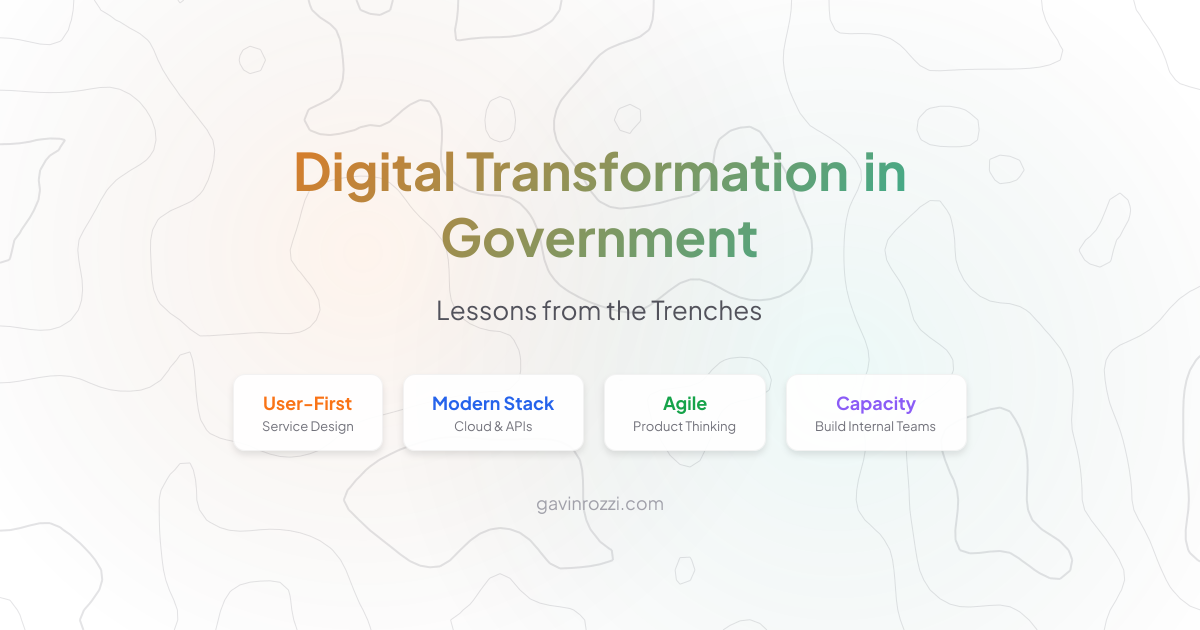
Digital transformation in government isn’t just about buying new software—it’s about fundamentally rethinking how government delivers services to residents. Here’s what I’ve learned from working on modernization initiatives.
What Digital Transformation Really Means
At its core, digital transformation is about:
- Resident-first service design
- Data-driven decision making
- Process automation and efficiency
- Modern, maintainable technology
- Cross-agency collaboration
The Challenges are Real
Legacy Systems
Many agencies rely on technology from the 1980s and 1990s:
- Mainframe systems with outdated programming languages
- On-premise servers requiring constant maintenance
- Software vendors who’ve gone out of business
- Institutional knowledge concentrated in retiring staff
Budget Constraints
Government IT budgets face intense pressure:
- Competing priorities in tight fiscal environments
- Political resistance to “technology spending”
- Difficulty demonstrating ROI to stakeholders
- Procurement processes favoring lowest bidder over best value
Cultural Inertia
Perhaps the biggest challenge:
- “We’ve always done it this way” mentality
- Risk aversion leading to paralysis
- Siloed departments refusing to share data
- Union concerns about automation
What Works: Proven Strategies
1. Start with User Needs
Don’t assume you know what residents want:
- Conduct user research and interviews
- Map current service journeys
- Identify pain points and opportunities
- Design solutions collaboratively
2. Think Product, Not Project
Shift from waterfall projects to ongoing product development:
- Build minimum viable products (MVPs)
- Iterate based on user feedback
- Measure actual usage and outcomes
- Continuously improve over time
3. Embrace Modern Tech Stack
Use proven, widely-supported technologies:
- Cloud infrastructure (AWS, Azure, GCP)
- Modern frameworks (React, Next.js, Node.js)
- API-first architecture
- Open source when possible
4. Build Internal Capacity
Don’t just rely on vendors:
- Hire and retain technical talent
- Provide professional development
- Create career paths for technologists
- Foster innovation culture
5. Use Agile Methodologies
Adapt private sector best practices:
- Sprint-based development cycles
- Daily standups and regular retrospectives
- Cross-functional teams
- Continuous integration and deployment
Case Study: Municipal Lead Portal
When building the Municipal Lead Portal for tracking lead hazards across 564 New Jersey municipalities:
Challenge: Multiple agencies needing to access and update shared data in real-time while maintaining security and compliance.
Solution:
- Cloud-based React application
- Role-based access control
- Real-time data synchronization
- Mobile-responsive design
- Integrated with existing state systems
Results:
- Reduced reporting time by 70%
- Eliminated duplicate data entry
- Improved inter-agency collaboration
- Enhanced public health outcomes
Technical Decisions That Matter
Choose the Right Database
Don’t default to what you know:
- PostgreSQL for relational data with complex queries
- MongoDB for document storage and flexibility
- Redis for caching and sessions
- Consider managed services for easier operations
API Strategy is Critical
Build for integration from day one:
- RESTful APIs for standard CRUD operations
- GraphQL for complex data requirements
- Comprehensive documentation
- Rate limiting and authentication
- Versioning strategy
Security Cannot Be Afterthought
Government applications require defense in depth:
- Regular security audits and pen testing
- Encryption at rest and in transit
- Multi-factor authentication
- Principle of least privilege
- Comprehensive logging and monitoring
Common Pitfalls to Avoid
1. Vendor Lock-In
Maintain control of your destiny:
- Avoid proprietary formats
- Ensure data portability
- Use open standards
- Build internal knowledge
2. Scope Creep
Start focused, expand deliberately:
- Clearly define MVP scope
- Resist “while we’re at it” additions
- Launch and learn, then iterate
- Measure before expanding
3. Neglecting Change Management
Technology is the easy part:
- Train users thoroughly
- Provide ongoing support
- Address concerns proactively
- Celebrate wins publicly
4. Ignoring Accessibility
Government must serve everyone:
- WCAG 2.1 AA compliance minimum
- Test with assistive technologies
- Consider digital literacy levels
- Provide alternative access methods
Measuring Success
Define clear metrics before launch:
Efficiency Metrics:
- Time to complete transactions
- Error rates and rework
- Staff time saved
- Cost per transaction
User Satisfaction:
- Net Promoter Score (NPS)
- Completion rates
- Support ticket volume
- User feedback surveys
Business Outcomes:
- Services digitized
- Revenue collected
- Compliance rates
- Policy objectives achieved
The Human Element
Remember: technology serves people, not the other way around.
The best technical solution fails if:
- Users don’t understand it
- Staff aren’t trained properly
- It doesn’t fit existing workflows
- It solves the wrong problem
Advice for Leaders
If you’re driving digital transformation:
- Be patient but persistent - Change takes time
- Communicate constantly - Over-communicate your vision
- Show quick wins - Build momentum with visible successes
- Protect your team - Shield them from politics
- Stay technical - Understand what you’re building
The Future is Now
Government technology doesn’t have to lag behind private sector. With the right approach, public sector applications can deliver exceptional user experiences while maintaining security, accessibility, and fiscal responsibility.
The question isn’t whether government can modernize—it’s whether we have the will to do it.
Resources
Let’s build government that works for everyone.
About Gavin Rozzi
